Home / Resources / Strategy library
Resources · Strategy library
Public strategies, written as exact rules on real charts.
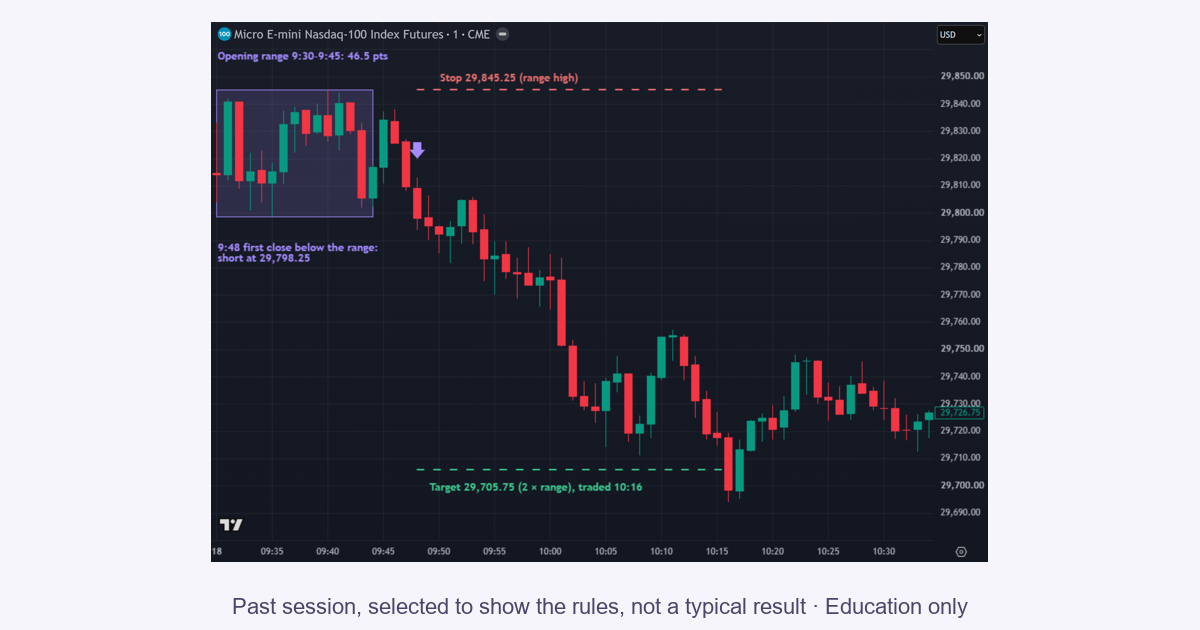
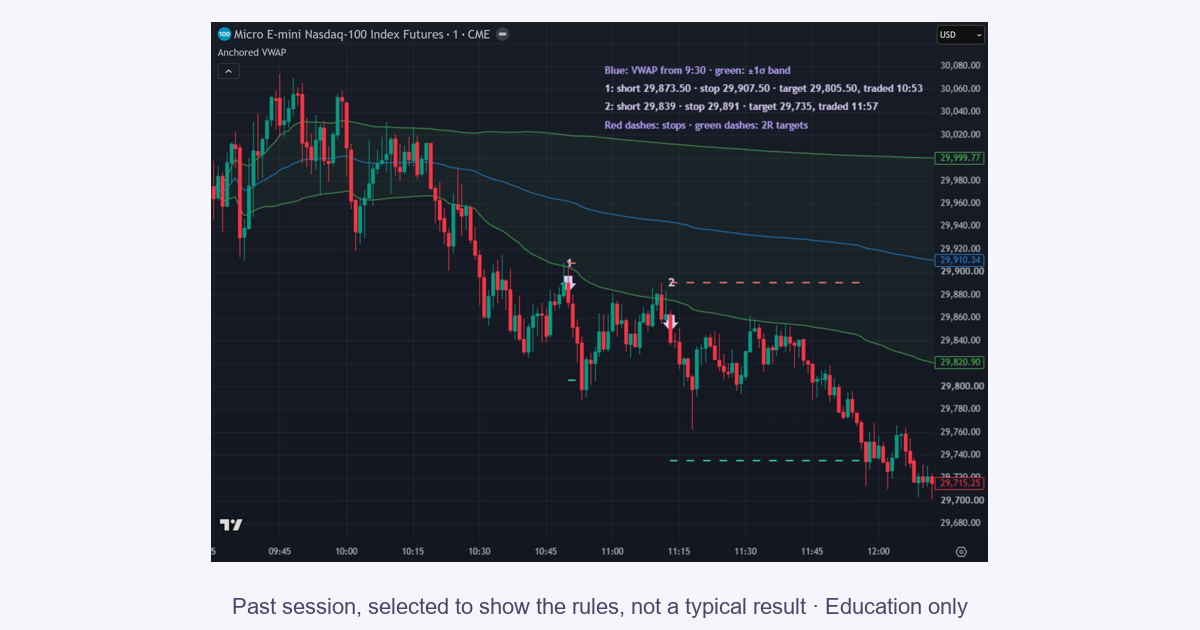
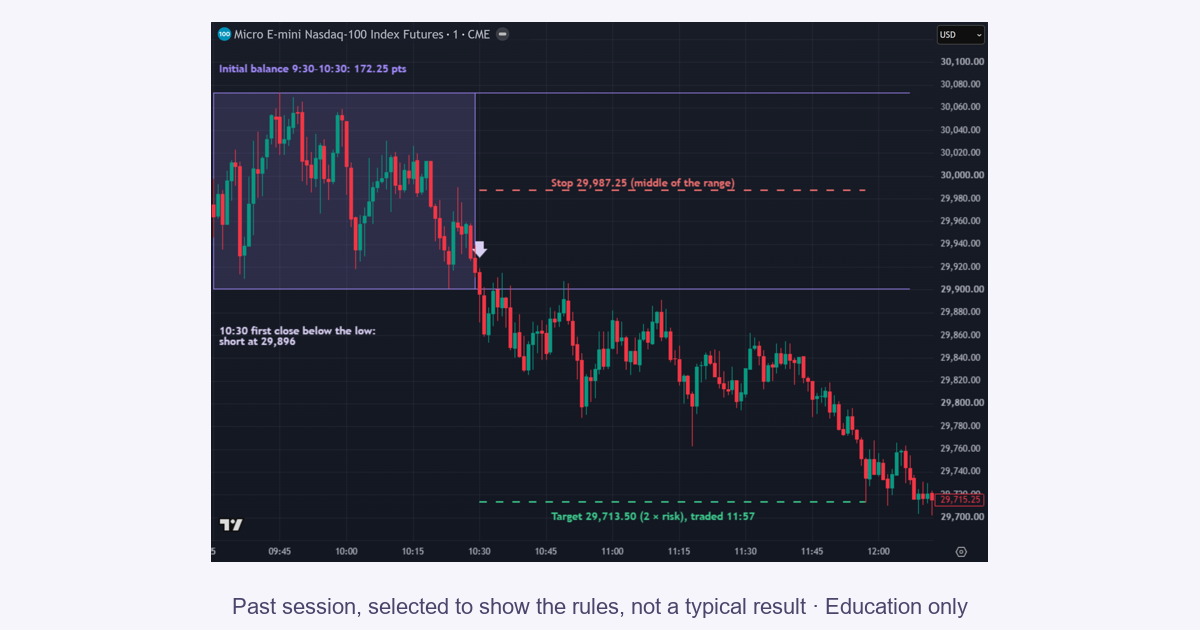
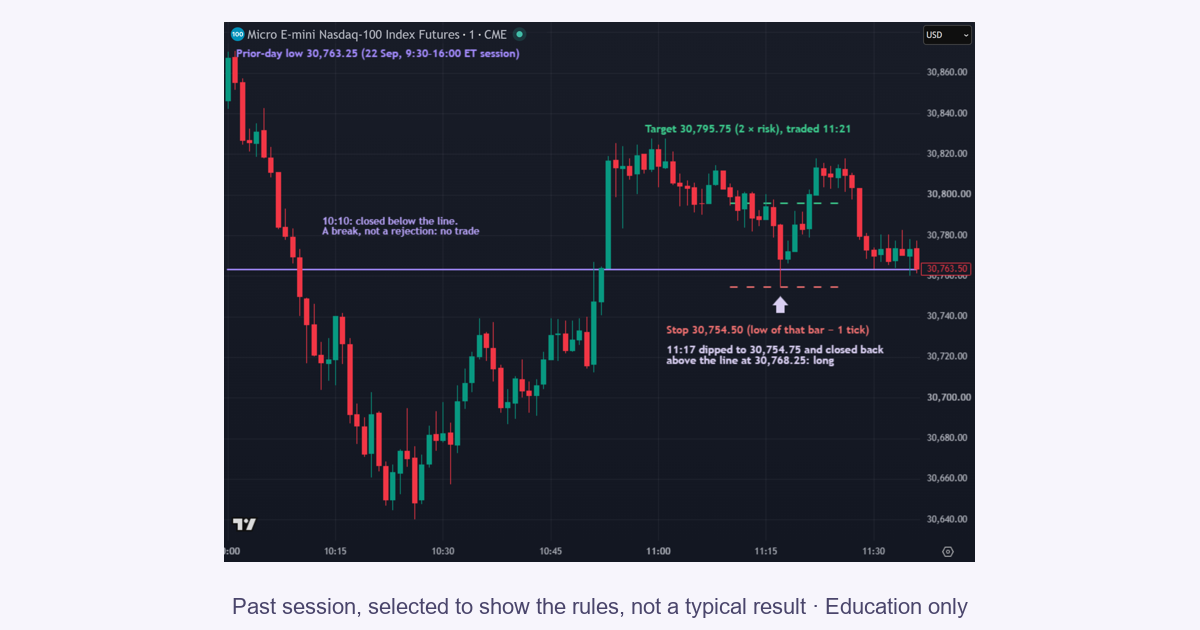
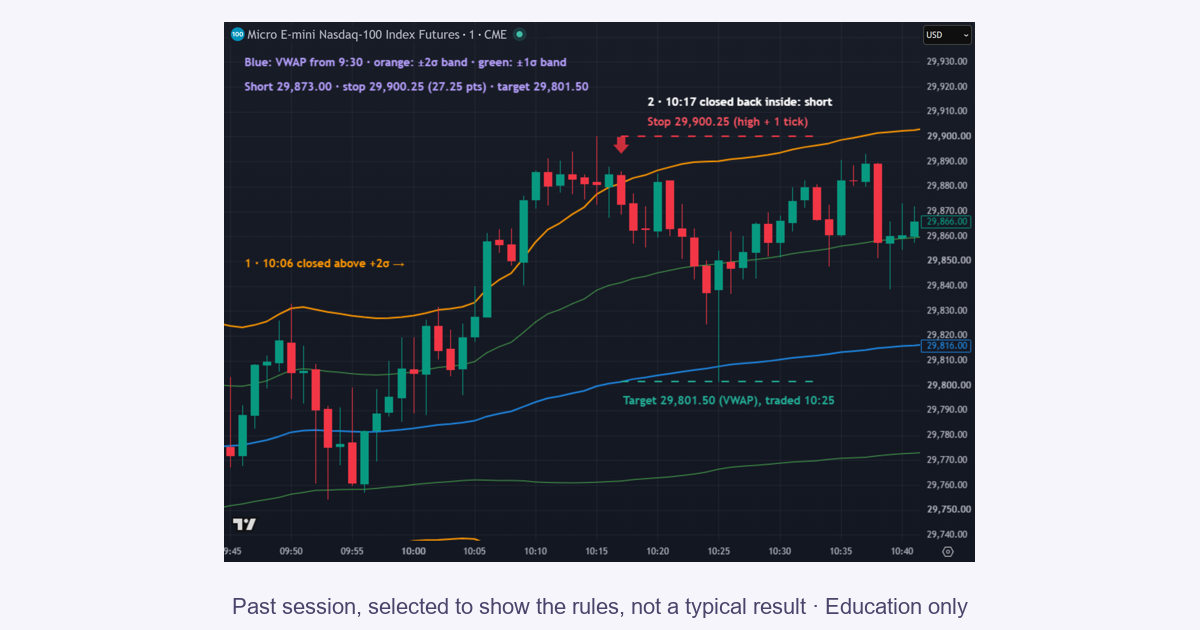
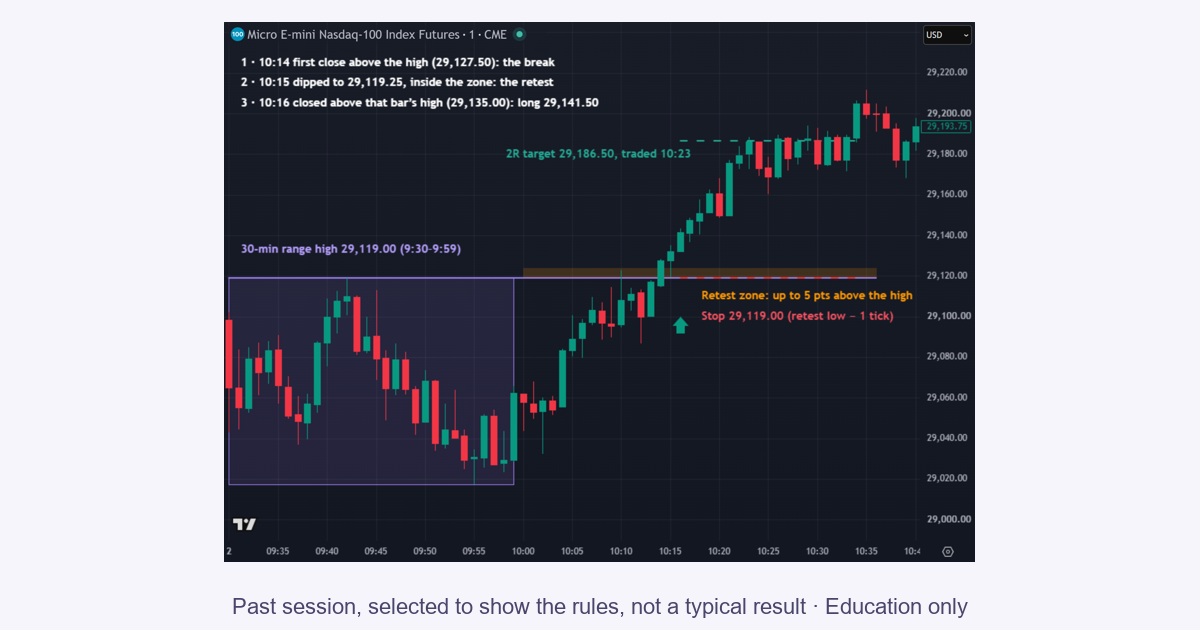
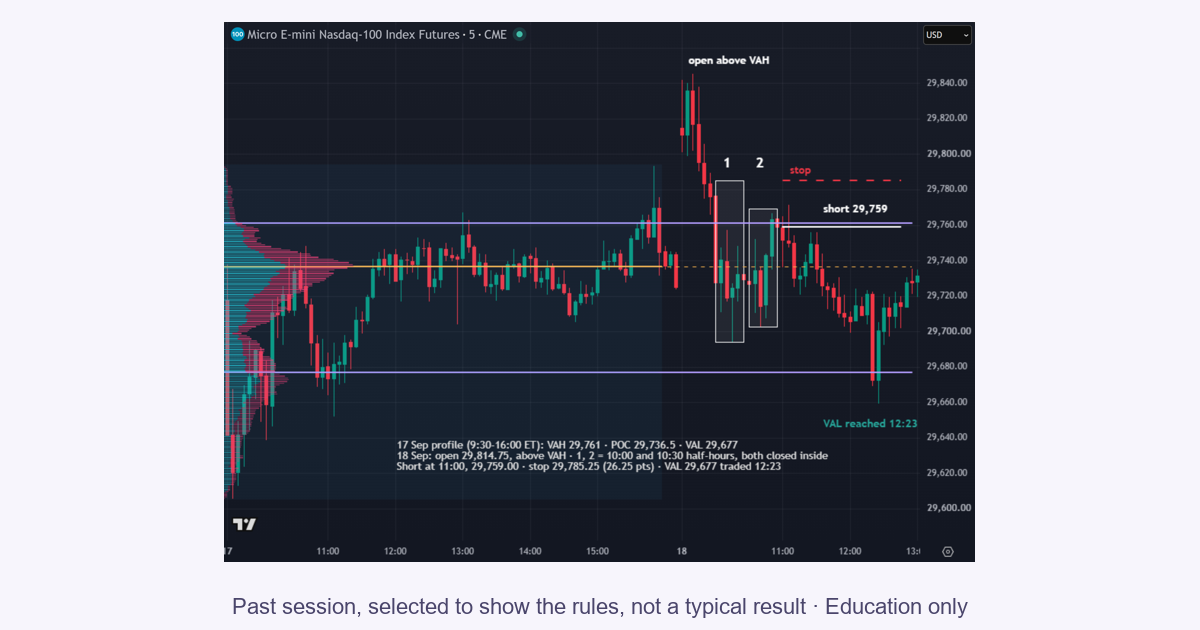
Widely known intraday futures strategies, written as exact rules, walked through on real past MNQ sessions (including a day each one failed), and checked against the prop firm rules that end evaluations: trailing drawdowns, daily loss limits and consistency. The overview is free to read; the full breakdown is free with your email.
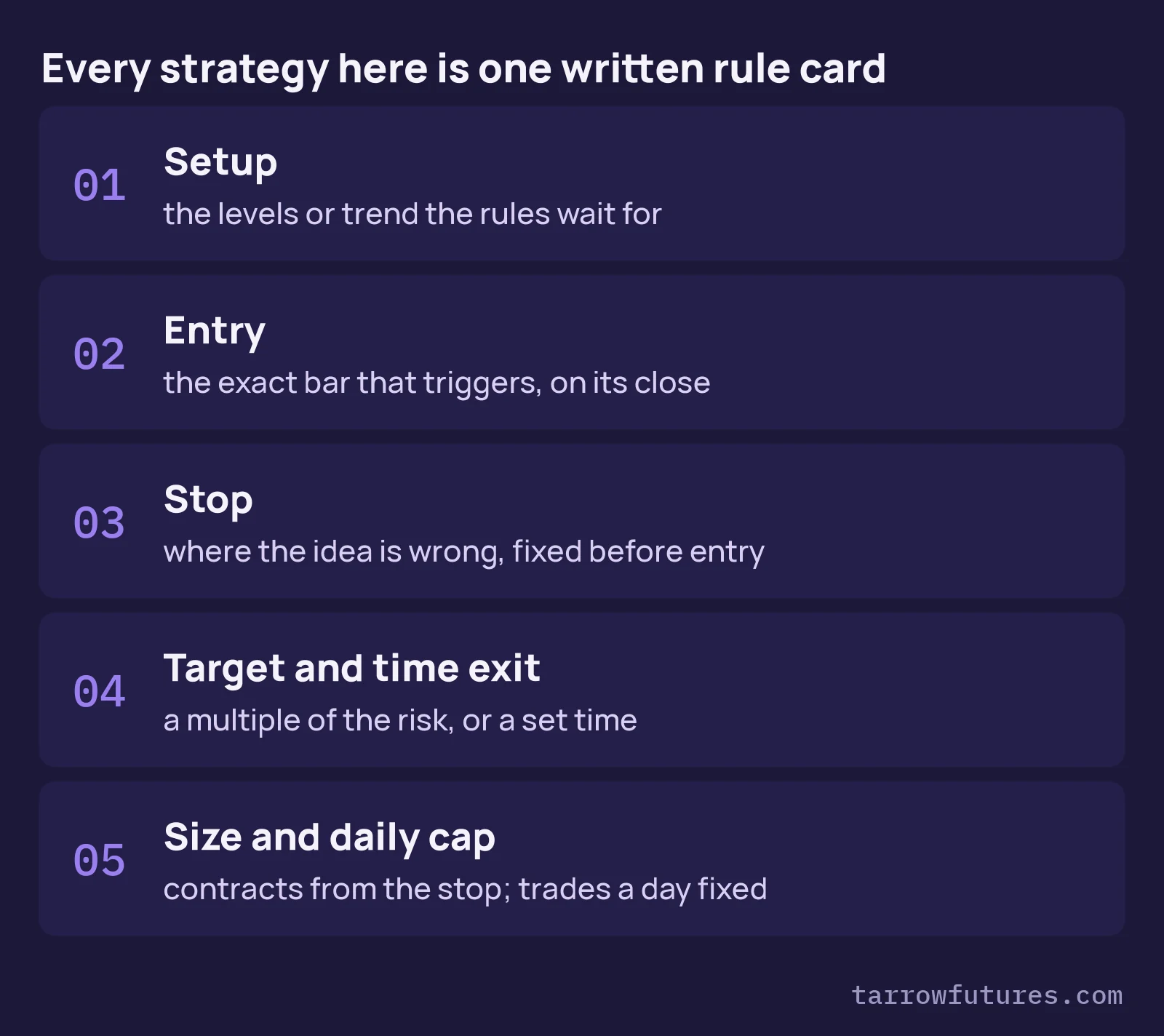
Want to test one yourself? Our free 32-page guide shows how to turn written rules into a strategy you can backtest and stress-test before it costs you an evaluation.
Get the free guideDisclosures
Education only. This page explains how a widely known, public strategy is defined and how you could test it yourself. It is not advice, not a recommendation to trade any contract, size or strategy, and not a signal: it shows no setup for any future session. Charts are real past sessions, chosen to show the rules (including a day they failed); they are selected examples, not typical results. The charts are TradingView snapshots (MNQ1!, regular trading hours, one-minute unless the caption says otherwise; a volume profile, where shown, is TradingView's built-in Fixed Range Volume Profile); diagrams labelled as illustrations are drawn by Tarrow Futures and are not market data. The level, range, entry, stop and target marks and labels on them were added by Tarrow Futures. Bars may differ slightly from those on your platform. Trade outcomes on this page are what the written rules would have done on those days, before commissions and slippage. They are not trades Tarrow Futures placed. Dollar figures for sequences and rules are example figures, not results. Prop firm rules differ and change; your firm's current rulebook decides. Futures trading involves substantial risk of loss. Automation does not remove risk.
CFTC Rule 4.41: Hypothetical or simulated performance results have certain limitations. Unlike an actual performance record, simulated results do not represent actual trading. Also, since the trades have not been executed, the results may have under- or over-compensated for the impact, if any, of certain market factors, such as lack of liquidity. Simulated trading programs in general are also subject to the fact that they are designed with the benefit of hindsight. No representation is being made that any account will or is likely to achieve profit or losses similar to those shown.