Build it. Break it.
Then trade it.
Most automated strategies look better in a backtest than they ever trade. This free 32-page guide shows where the gap comes from, and how to stress-test a strategy against slippage, webhook delays and prop firm drawdown rules before it costs you an evaluation.
It's yours.
Download it below. A copy is on its way to your inbox too (check spam if it is not there in a few minutes).
Download the guide (PDF) See the other free tools →- 32 illustrated pages
- Backtest vs live
- Prop-rule stress tests
- Free, no spam

What is inside
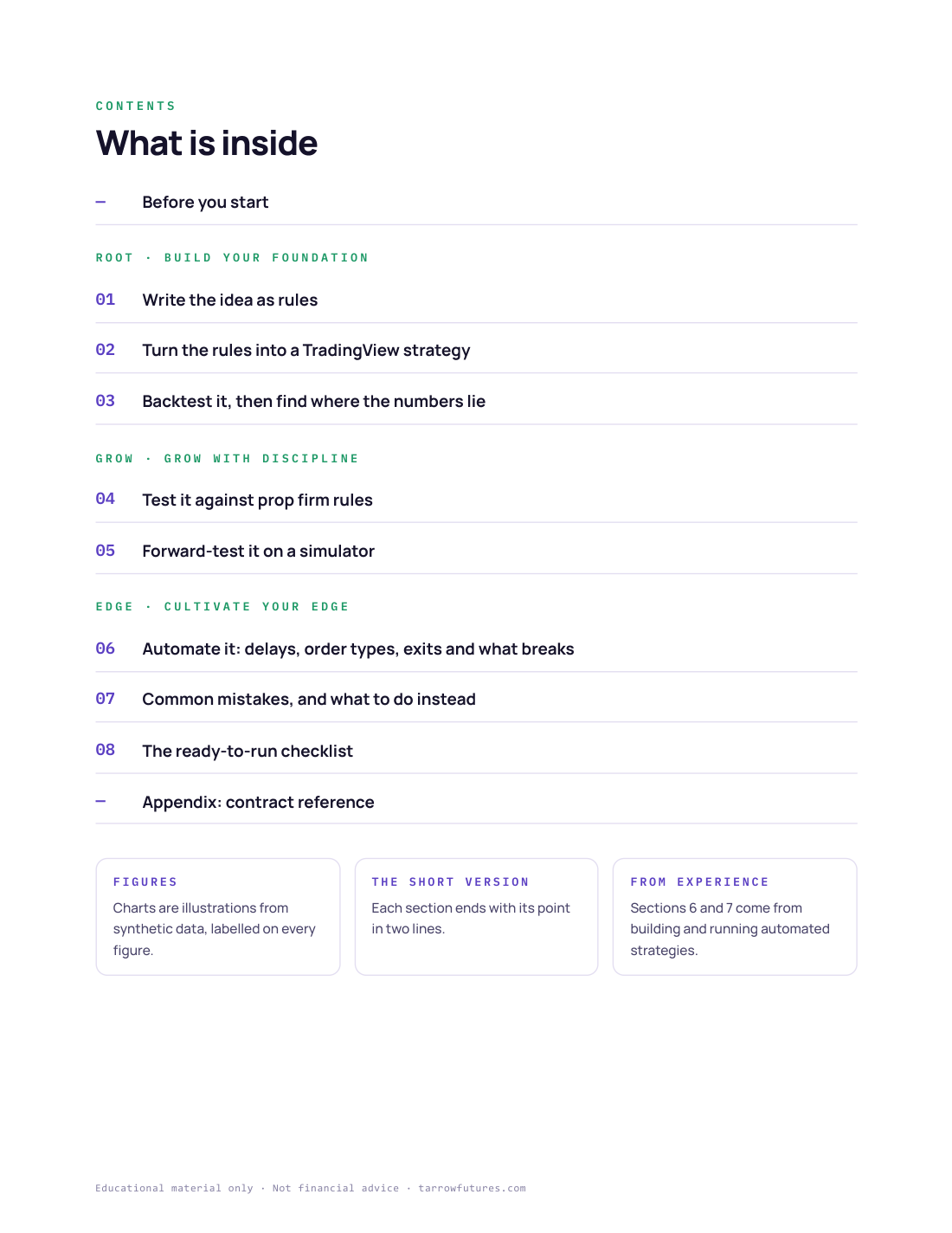
Eight sections, from first rule to live account.
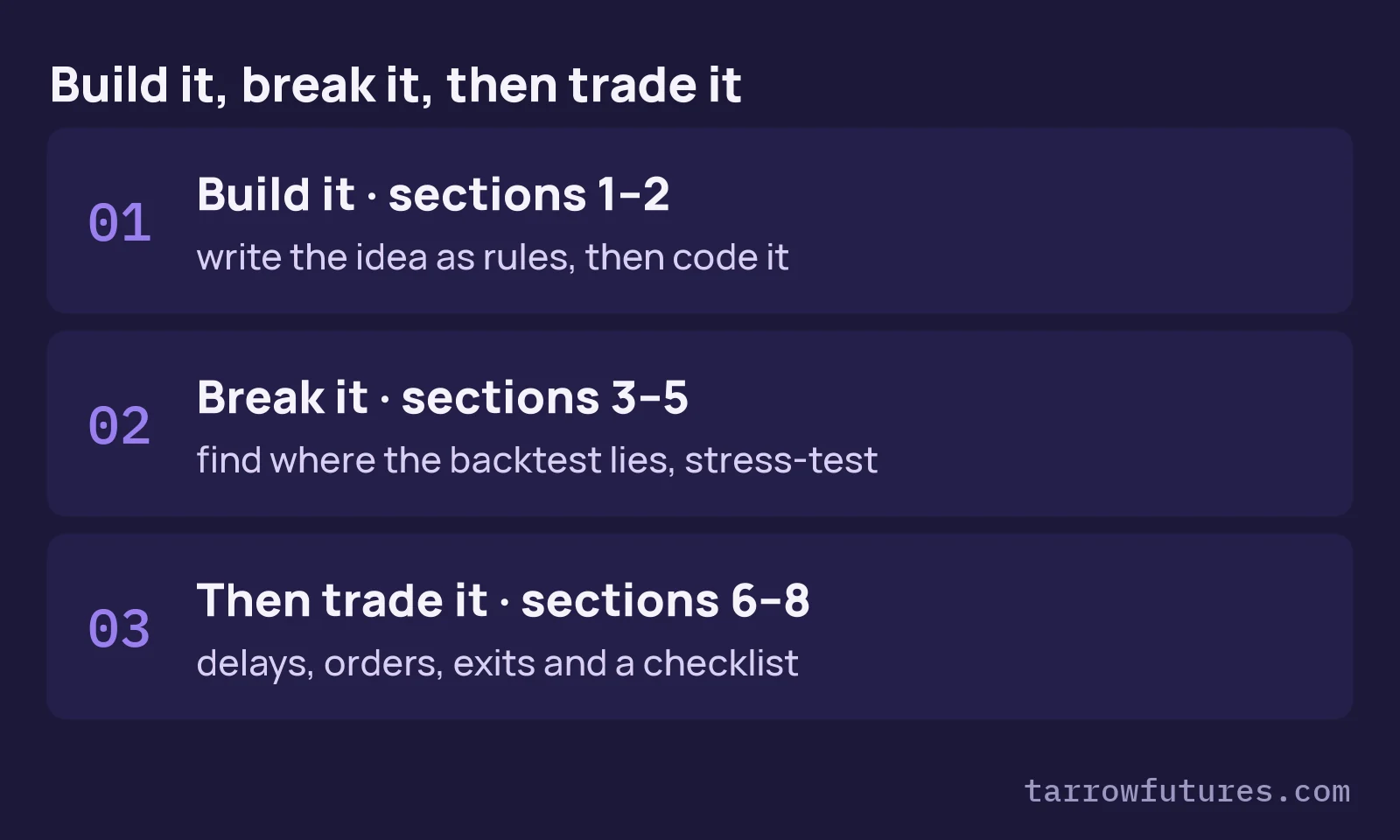
Build it
Sections 1–2: write the idea as rules a computer can follow, then turn the rules into a TradingView strategy.
Break it
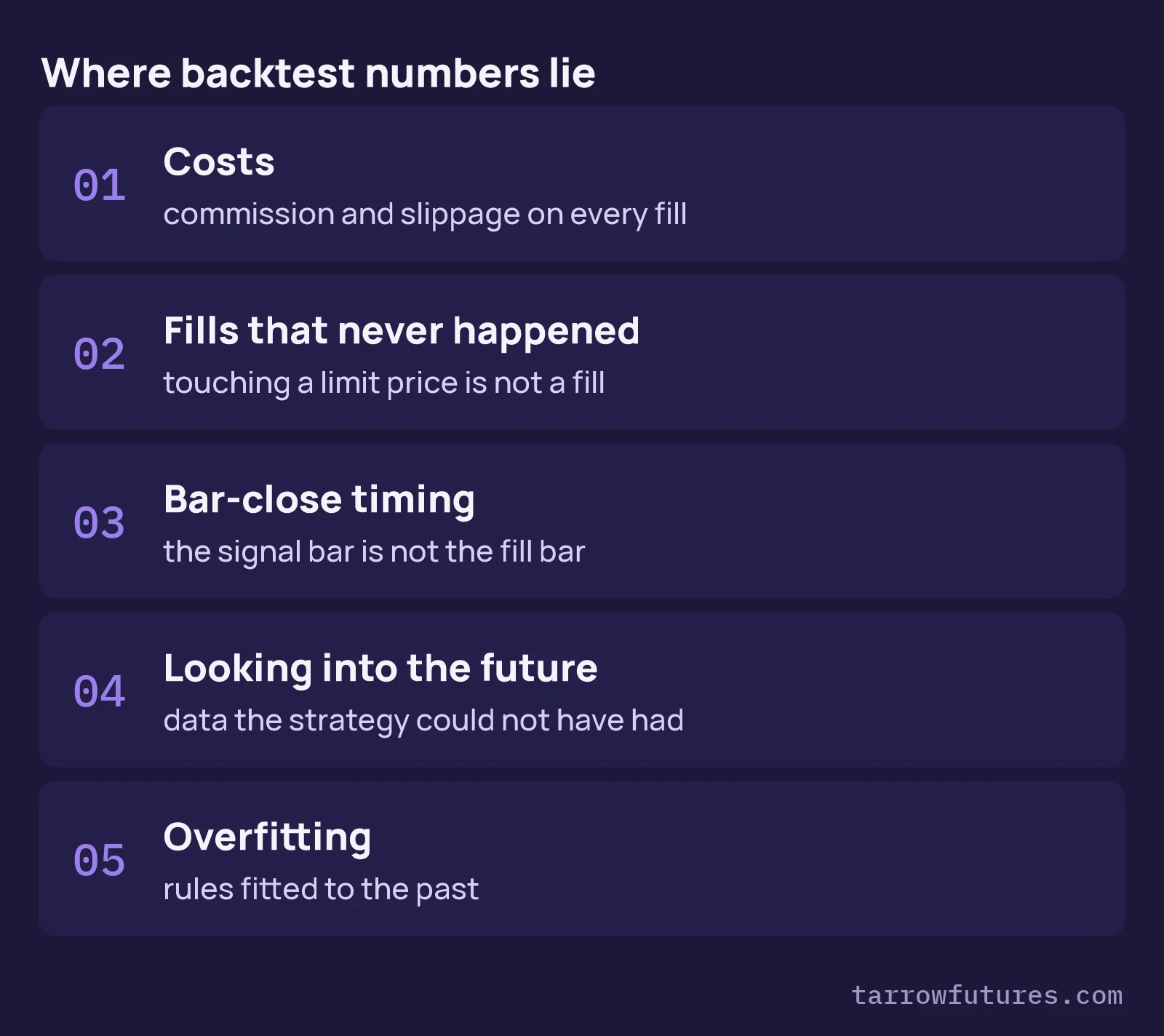
Sections 3–5: where backtest numbers lie, how the strategy holds up against prop firm drawdown and loss rules, and a forward test on a simulator.
Then trade it
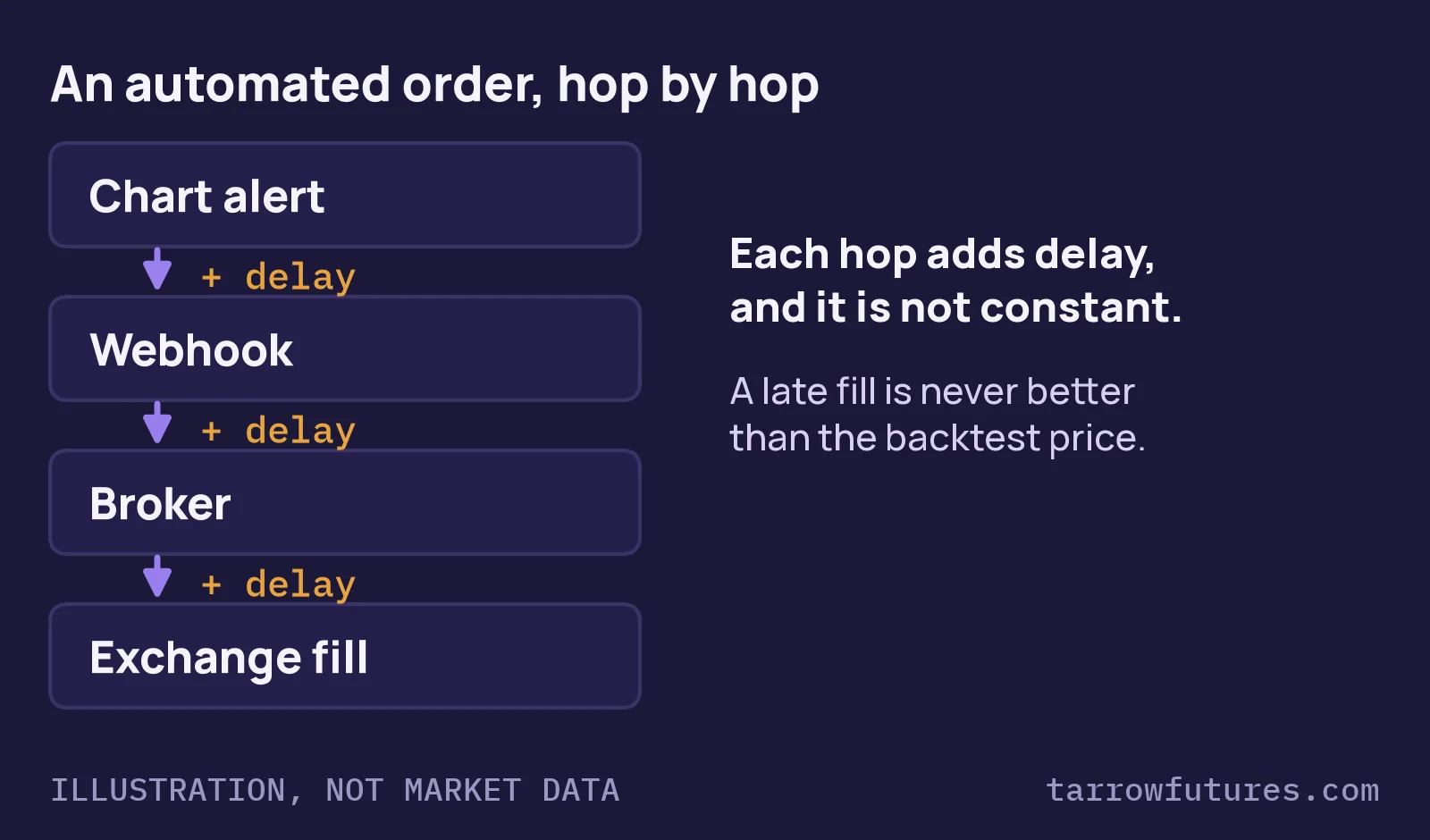
Sections 6–8: automation delays, order types and exits, the common mistakes, and a ready-to-run checklist.
In pictures
What the guide covers, in pictures
Who it is for
For traders who automate, or are about to.
Written from building and running automated futures strategies. It works at any firm and with any platform; every chart is an illustration and nothing in it is a strategy recommendation or a result. Educational material only, not financial advice.