Free tool · Education only
Up money, target hit. Does your best day fit?
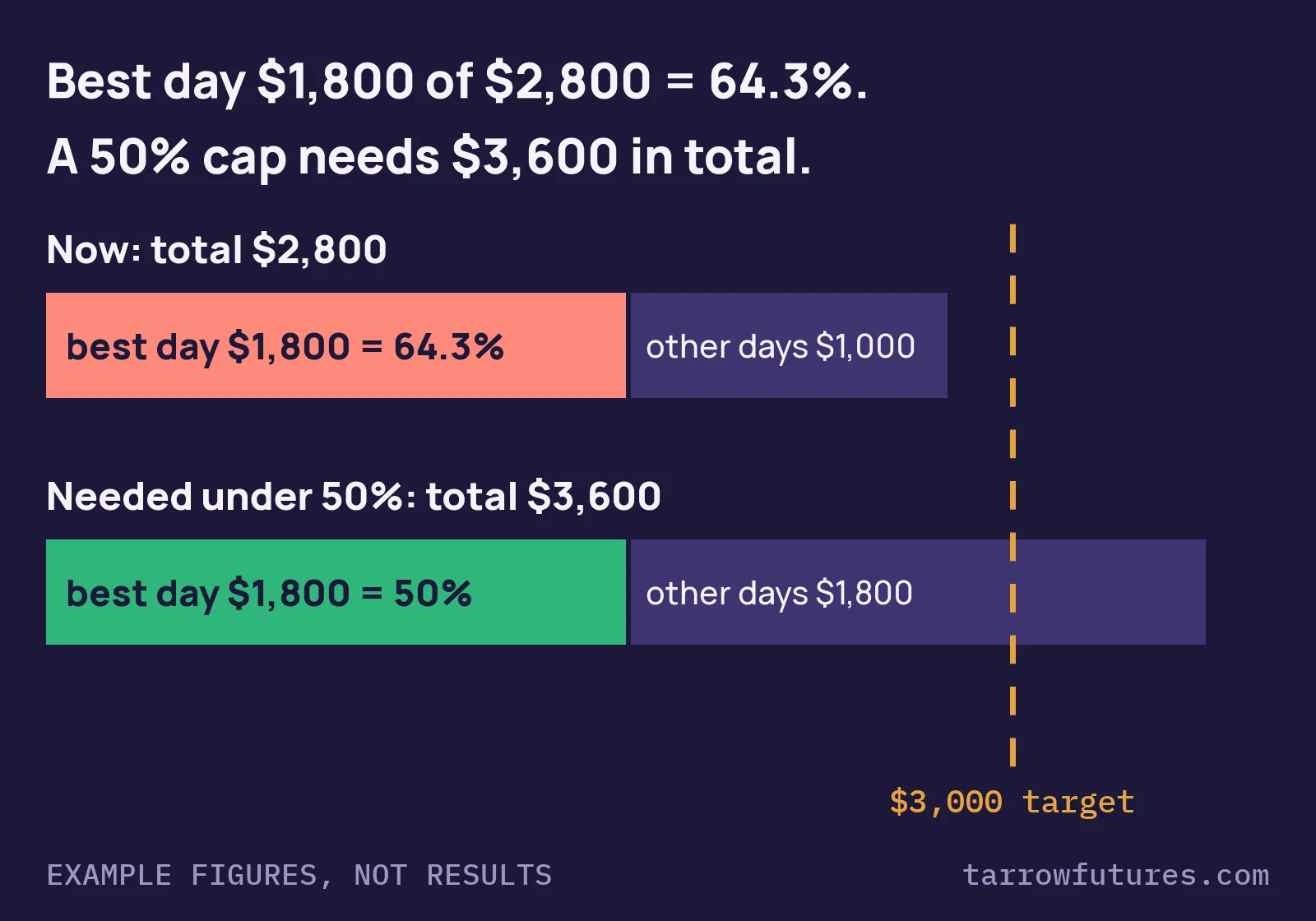
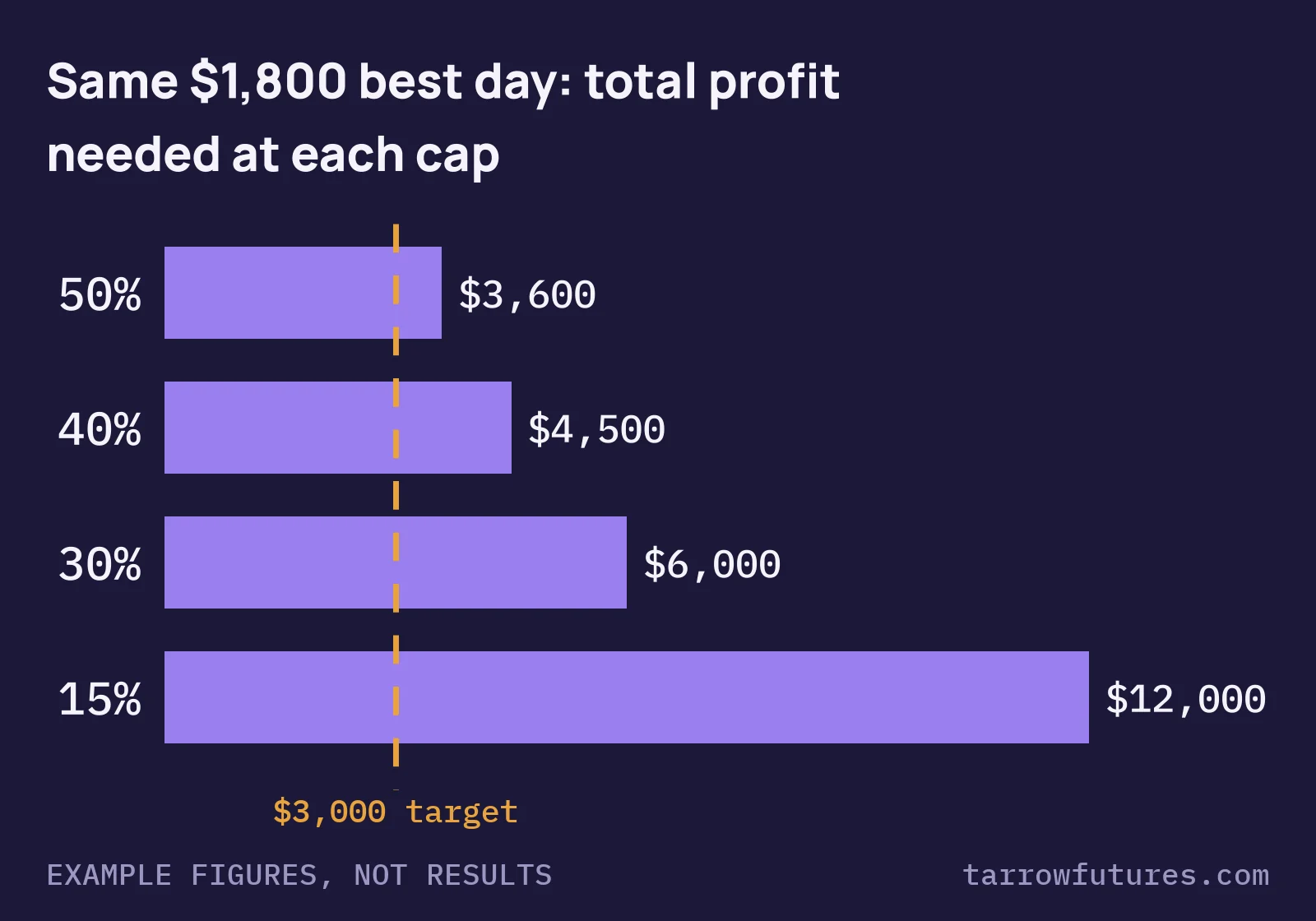
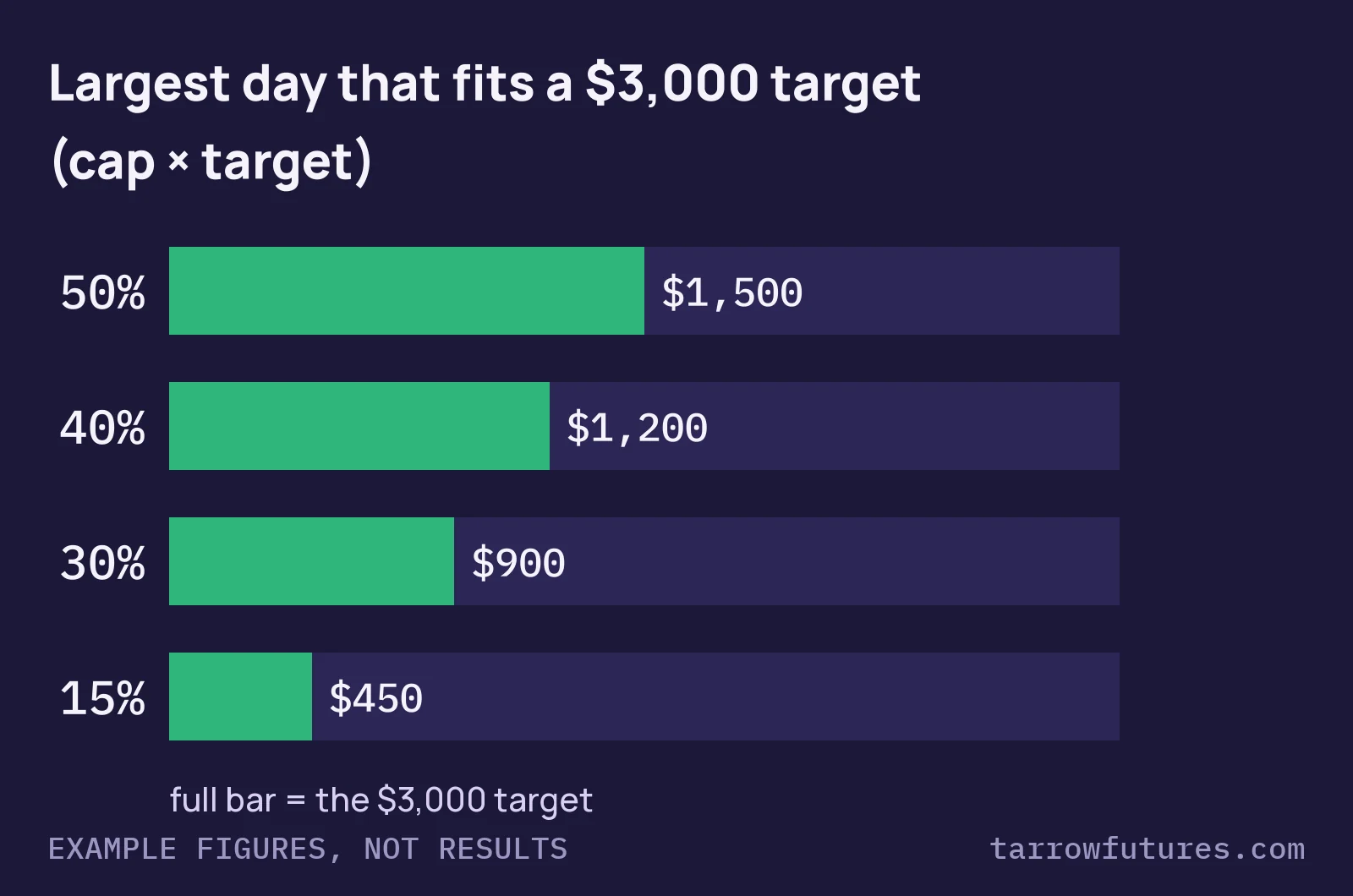
A consistency rule caps how much of your profit can come from one day. Paste your daily P&L to see your best day as a share, the cap in dollars, and where your target moves when a day goes over.
Unlocked. Your link is on its way by email.
Free with your email
Open the consistency rule checker
Enter your email to open the checker. We also send you the link, so it is one tap away next time.
Preview below. It opens the moment you unlock it.
Paste from your platform or type it. Losses with a minus sign or in brackets: -200 or (200). Commas inside numbers are fine (1,800).
Firms word this rule differently. Check your rulebook for what the % is taken of, and when it is checked: at pass, at payout, or every day.
How the rule works, in pictures
Know a trader running an evaluation? Send them this consistency rule checker. It's free for them too.
Education only. This calculator shows arithmetic from the numbers you enter. It is not advice and not a recommendation to trade any contract or any size. Firms define drawdown, lock levels, daily limits, contract caps and copy-trading rules differently, and your firm's current rulebook decides. Tick values are standard CME Group contract specifications; verify them on your platform. Futures trading involves substantial risk of loss. Prop firm evaluations are paid tests that most people do not pass.